Wastewater Sampling and Analysis
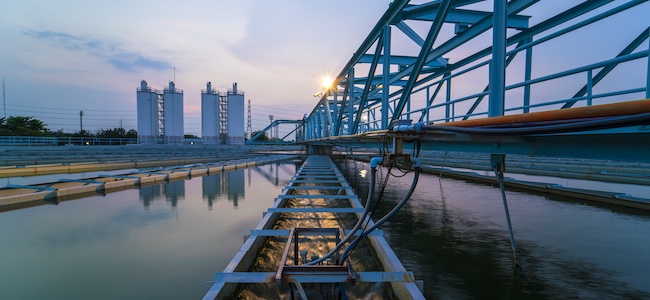
Accurate testing helps municipal and industrial wastewater treatment plants (WWTPs) run at peak efficiency. Accurate and reliable wastewater testing is crucial for ensuring environmental compliance, safeguarding public health, and optimising treatment processes. Wastewater treatment facilities play a vital role in managing water quality by removing contaminants before the treated water is released back into the environment or reused. Producing reliable test results is dependent upon both appropriate sampling and testing procedures. Inaccurate wastewater analysis could lead to unnecessary adjustments to your treatment process or even regulatory fines. Professionals in the field often encounter various challenges that can compromise the quality of their results. Understanding these issues – and how to address them – is essential for maintaining high standards in wastewater management. In this article, we explore some of the most common obstacles in wastewater sampling and testing and strategies to help any wastewater operator pull quality samples and test them reliably.
Sampling Procedures
Sampling Safely
In wastewater sampling and testing, safety comes first! Wastewater can contain harmful pathogens and chemicals, so follow your organisation’s safety guidelines closely. Always ensure you are wearing the appropriate Personal Protective Equipment (PPE) when pulling samples or conducting a test. After working with wastewater samples practice proper hygiene by washing your hands to keep yourself safe and prevent contamination of the area around you.
Consistency of Sampling and Handling Procedures
One of the most fundamental steps in wastewater analysis is the collection of samples. Yet, inconsistency in sampling techniques and improper sample handling can introduce significant variability, leading to unreliable test results. Factors such as time of collection, storage conditions, and contamination during transport can all skew data, making it difficult to evaluate the true composition of the wastewater. To ensure data integrity, wastewater professionals must adopt standardised sampling protocols and training programs.
Avoid Cross-contaminating Samples
A cross contaminated sample will not only provide an unreliable test result, but it will also require time to pull a new sample. Contaminated samples lead to a lot of wasted time, resources, and labor. Here are some tips from the USEPA Wastewater Sampling Operating Procedure on preventing cross contamination:
- Replace your disposable gloves each time you sample at a new location. The gloves should never touch what is being sampled.
- Wastewater samples that are suspected of containing high concentrations of contaminants should be stored separately from other samples.
- Wastewater sampling should be performed from the area with the least amount of contamination to the most.
- Ensure your samples are stored under their correct conditions. Some samples may need to be refrigerated to a specific temperature or cannot have headspace.
- Document and Label
Labelling and Documentation
Taking the time to properly label samples, log the conditions they were taken in, and record test results will save you time in the long run. Every sample should be labeled with:
- What the wastewater sample is for
- The date the sample was drawn
- Your initials
- Where the sample was drawn from
- The original volume of the sample
- The test to be run on the wastewater sample
Recording the conditions the samples were taken under can help draw patterns if you need to troubleshoot a surprising result. Test results should be recorded according to your organisation’s standards. Municipal wastewater facilities and industrial facilities may utilise different methods of recording test results.
Types of Wastewater Samples
The properties of wastewater are dependent on what is going through the system at any given time. For example, municipal wastewater follows a diurnal pattern where there is peak influent in the morning and in the evening. The samples taken during these times would be different from samples taken outside of the peak flow. To account for this variability wastewater sampling uses two common categories of samples, grab and composite.
Grab Sample
Grab samples are wastewater samples taken at one single time. They provide details for that single moment. Taking an aliquot of wastewater for analysis would be an example of a grab sample. These samples are most often used for process checks to ensure systems are operating properly.
Composite Sample
Composite samples of wastewater are used to analyse the average properties of the influent or effluent. They comprise of aliquots of sample taken over an extended period. An automatic sampler that draws a sample every hour and puts it into the same container is taking a composite sample. These samples are used to find larger trends when the average state of the wastewater treatment plant is important.
Sample Analysis
Streamlined and Efficient Testing Methods
Traditional analytical methods for wastewater testing often require multiple preparation steps, including manual mixing of reagents, calibration of instruments, and intricate measurement procedures. These complex processes increase the likelihood of human error and can be a significant drain on time and resources.
Streamlining testing workflows through simplified procedures can save valuable time and improve accuracy. CHEMetrics test kits are designed with pre-measured reagents vacuum sealed within mpoules, allowing users to perform tests quickly and easily, often in under two minutes, without the need for complex preparation or equipment. Using equipment that reduces the risk of human error, such as CHEMetrics’ self-filling ampoules, which automatically draw the precise volume of sample, helps ensure consistency across tests. Their sealed design minimises operator influence, improving reproducibility and reliability.
Avoiding Exposure to Hazardous Chemicals
Many traditional water testing methods involve the use of corrosive, toxic, or otherwise hazardous chemicals. Improper handling or disposal of these substances poses risks to both personnel and the environment. Additionally, safety compliance can be costly and time-consuming to maintain.
Minimising exposure to hazardous substances through the use of enclosed, pre-formulated reagents can enhance safety in the workplace. CHEMetrics’ vacuum-sealed ampoules eliminate the need for manual reagent handling, significantly reducing the potential for contact with dangerous chemicals and enhancing user safety.
Portability and Flexibility
In many cases, wastewater testing needs to be conducted in the field – such as at remote discharge points, industrial outfalls, or decentralised treatment systems. Traditional laboratory equipment can be bulky, fragile, and unsuitable for on-site use, limiting the ability to perform real-time assessments.
Compact and portable testing solutions make it easier to perform accurate assessments in the field. CHEMetrics kits are lightweight, self-contained, and designed for portability – each kit includes everything needed to conduct up to 30 tests, making them ideal for use in the field.
Meeting Regulatory Compliance and Reporting Requirements
Regulatory bodies such as the Environment Agency (EA), SEPA, NIEA, EPA and EC mandate strict limits on pollutants and require regular reporting of discharge data. Keeping up with these evolving regulations and maintaining accurate records for audits and compliance checks can be demanding.
User-friendly testing methods help ensure accurate results that align with regulatory standards. CHEMetrics’ kits deliver precise, repeatable results that support timely decision-making and regulatory reporting, giving wastewater operators confidence in their compliance efforts.
Wastewater Parameters
Depending on your environmental permit, the tests you use to analyse wastewater may be different from other municipal wastewater or industrial facilities. The following tests are common in wastewater analysis and if not required by environmental permits are often run as process checks to keep wastewater treatment works (WWTWs) running at peak efficiency. Please see our Water and Wastewater Treatment page for information on other test parameters.
Ammonia Testing
Ammonia levels in effluent are strictly enforced by the Environment Agency in the UK and Environment Protection Agency (EPA) in Ireland as it is toxic to fish and the environment. As a result, many municipal wastewater and industrial wastewater facilities are designed with removing ammonia as a primary concern. Ammonia is produced as byproduct of the decomposition of proteins and amino acids and is found in sewage effluent and agricultural runoff.
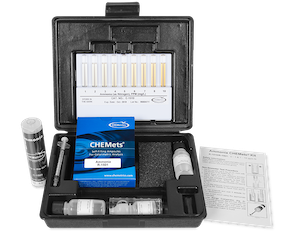
CHEMetrics offers a large range of visual and photometric ammonia test kits for the analysis of wastewater for both low and high concentration levels. The K-1510 CHEMets® ammonia test kit measures ammonia in the range 0 - 1.0 ppm and 1 - 10 ppm as NH3-N and has been approved by the USEPA for use in wastewater NPDES reporting.
Figure 1: CHEMetrics K-1510 is a visual test kit offering fast ammonia measurements in the field.
Chlorine Testing
Chlorine is widely used as a disinfectant in municipal wastewater. It is a relatively low-cost disinfection method and can be applied as a solid, liquid, or gas. Chlorine will remain in wastewater for hours after application and provide disinfection as residual chlorine. Most WWTPs will have discharge permit requirements for total residual chlorine in their effluent. Even at low doses chlorine can be toxic to aquatic wildlife, so managing chlorine is a top priority for both human and animal health. Chlorine is often measured as either free chlorine or total chlorine.
Free chlorine is the most reactive type of chlorine and represents the amount of chlorine that is available for disinfection in the wastewater. It is not commonly measured in wastewater applications but is useful to understand how it applies to total chlorine.
Total chlorine represents the total amount of chlorine in the water. It includes free chlorine and chlorine that is bonded into other molecules like monochloramine (NH2Cl), which is called combined chlorine. Total chlorine is commonly measured in wastewater effluent and referred to as total residual chlorine.
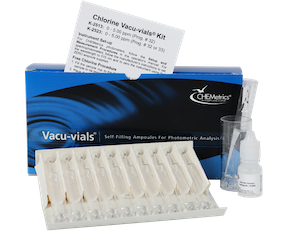
CHEMetrics offer a large range of visual and photometric chlorine (free and total) test kits for the analysis of wastewater for low to high concentration levels. The K-2513 Vacu-vials® test kit measures free and total chlorine in the range 0 - 5.00 ppm and has been approved by the USEPA for use in wastewater NPDES reporting.
Figure 2: CHEMetrics K-2513 is an instrumental test kit offering fast free and total chlorine measurements in the field.
Hardness Testing
Measuring hardness is helpful for the efficiency of any municipal or industrial WWTP. Hardness is caused by minerals in water like calcium and magnesium. High hardness can cause scaling and interfere with many of the treatment steps like filtration and sedimentation. Understanding the hardness of the water being treated can help prevent costly unexpected maintenance and troubleshoot efficiency problems.
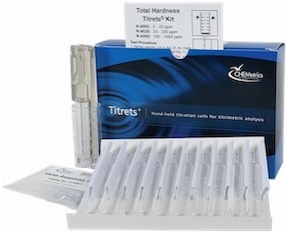
CHEMetrics offers hardness (total) test kits with the familiar EGTA and EDTA methods. These kits come with everything you need for 30 tests and utilise the Titrets® testing method. This method uses a vacuum sealed glass ampoule to conduct a reverse titration so the test can be conducted right in the field. The video below shows how easy Titrets are to work with.

Figure 3: CHEMetrics K-4520 is an titrimetric test kit employing the EDTA method offering fast total hardness measurements in the field.
Partnering with Galgo and CHEMetrics
Wastewater treatment is a complex environment with many changing influent and regulatory requirements. Addressing the challenges associated with wastewater sampling and testing requires a combination of standardised procedures, enhanced safety measures, portability, and simplified methods that provide reliable results. By adopting innovative solutions like those offered by CHEMetrics, professionals can improve the accuracy and efficiency of their testing processes, ensuring better outcomes for the environment and public health. Contact us today to ensure you have the tests you need, when you need them!